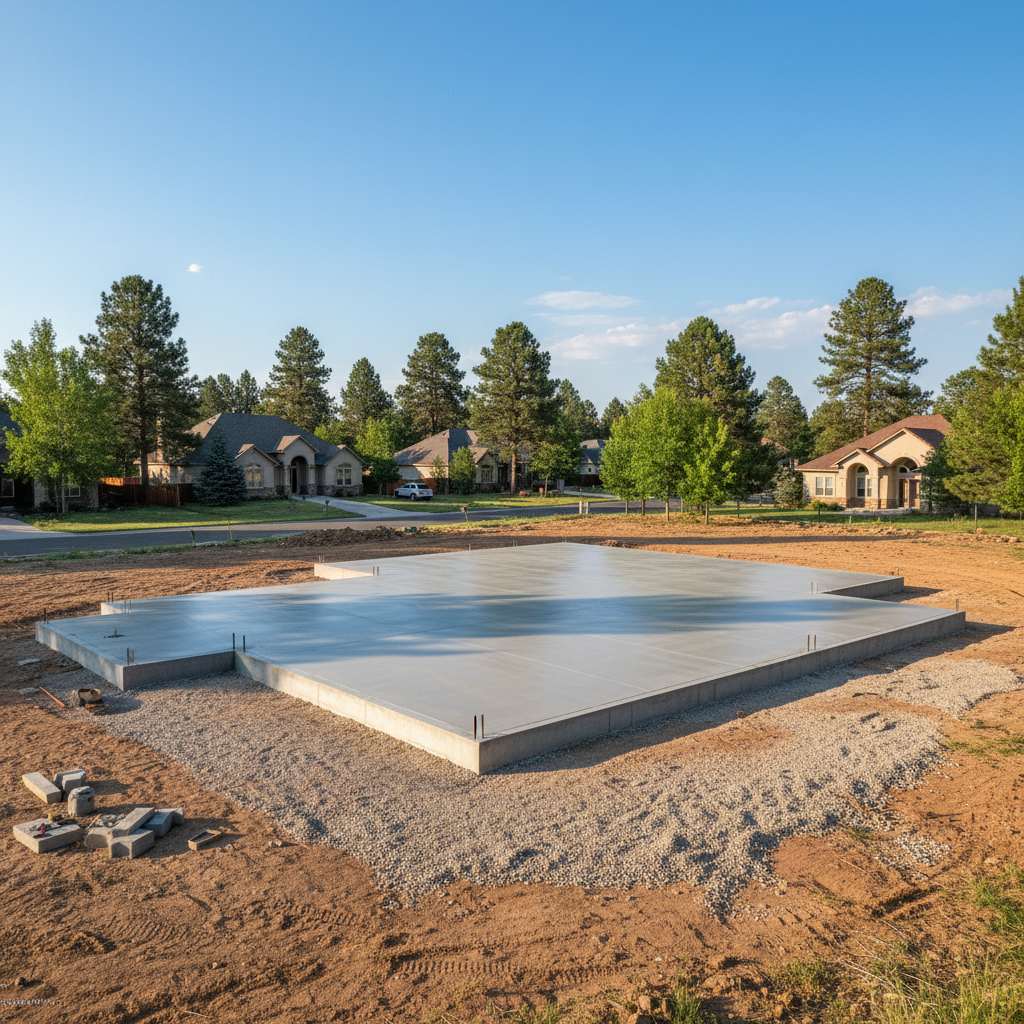
Ever wonder why a really solid concrete foundation matters so much, especially right here in Flagstaff? It's not just about pouring some concrete and calling it done. Our unique weather and ground conditions mean building a foundation that truly lasts takes genuine local know-how. If you're putting up a new house, adding on, or just curious about how sturdy your current place is, this information is for you.
Flagstaff's Frost Line and the Freeze-Thaw Cycle
Let's talk about the big one first: winter. We're up at 7,000 feet, which means we get real winters with serious snow and cold temperatures. This creates something called the freeze-thaw cycle. Water in the soil freezes, then it expands, pushing up on anything in its path—that's frost heave. Later, it thaws, and the ground settles back down. This constant motion can really mess up a poorly built foundation, leading to cracks, uneven floors, and doors and windows that stick.
The City of Flagstaff requires a frost line depth of 30 inches. That means any outside footings need to go at least 30 inches deep into untouched soil. Why? To get below where the ground freezes and expands. If your foundation isn't deep enough, you're just asking for trouble down the road. It's not just about following the rules; it's about building something that will hold up against our mountain climate for years.
The Real Deal on Flagstaff's Soil
Beyond the cold, our soil here is a whole different animal. We're sitting on a volcanic field, so you'll find everything from volcanic cinders to expansive clays. Cinders are porous and can compress, and if footings don't reach a more stable layer underneath, they can settle unevenly, especially with snowmelt and monsoon runoff. Then there's the expansive clay, which swells when it gets wet and shrinks when it dries. This constant movement can cause your foundation to heave or settle, and both are bad news for your home's structure.
Take older neighborhoods, for instance, like those around the university. You might find homes built before modern soil tests were standard practice. The ground beneath them could be a mix of these tricky types. That's why a thorough site analysis and soil testing are absolutely critical before any foundation work even starts. You can't just guess what's under there; you need to know for sure so you can design a foundation that can really handle it.
Common Foundation Projects We See Around Town
Given these conditions, what sorts of foundation projects does Flagstaff Concrete Group usually handle?
- New Home Foundations: Whether it's a custom build in Forest Highlands or a new development out near Fort Tuthill, getting the foundation right from day one is super important. This means careful excavation, strong rebar installation, and high-strength concrete mixes made for our climate.
- Additions and Garages: Expanding your living space or adding that much-needed garage means connecting to an existing structure. You've got to make sure the new foundation works with the old one and can handle the same environmental pressures without causing things to settle unevenly.
- Foundation Wall Replacements/Repairs: Sometimes, older foundation walls, especially block walls, show signs of stress after years of freeze-thaw cycles or poor drainage. Horizontal cracks, bowing walls, or water getting in are all signs that you need a replacement or a major repair.
- Manufactured Home Foundations: Even manufactured homes in Flagstaff need permanent, frost-depth footings and foundations to meet local codes and stay stable for the long haul.
Why Local Expertise Isn't Just a Fancy Phrase
You might think concrete is concrete, no matter where you are. But in Flagstaff, that couldn't be further from the truth. Our local building codes reflect our unique environment, requiring things like specific snow loads (up to 60 pounds per square foot) and that 30-inch frost line. We're also in Seismic Design Category C, you know?
A contractor from Phoenix or Tucson might not grasp the finer points of building on volcanic cinders or how crucial good drainage is during our intense monsoon season. When water pools around your foundation, it can lead to spalling or rebar blowout. We've seen it all, from homes in Mountainaire with moisture problems in their crawlspaces from melting snow to properties in Doney Park dealing with expansive clay. It's a real mess sometimes.
Local pros know to factor these things into their designs and how they do the work. We know the best concrete mixes for high-altitude performance and durability against severe weather. We also understand the importance of a geotechnical evaluation, especially for new construction, to really get a handle on the specific soil conditions on your lot.
Choosing a local company like Flagstaff Concrete Group means you're getting someone who lives and works here, someone who truly understands the challenges our mountain town throws at us. We're not just pouring concrete; we're building the literal bedrock of your home, designed to last in Flagstaff's one-of-a-kind environment.